![[slide:title]](/static/upload/other/20260512/1778551853592214.webp)
![[slide:title]](/static/upload/other/20260512/1778551954982306.webp)
Time:2026-09-30 Form:本站
The global dental implant industry continues to advance toward digitalization, multi-system compatibility and lean supply chains. As core precision components connecting implants and final restorations, implant accessories directly influence clinical restoration outcomes and channel supply chain stability through their category adaptation, quality standards, supply models and scenario-based selection. In the early phase of the industry, the market relied heavily on closed matching systems from single original manufacturers, with simple accessory selection and fixed product ranges. Today, mixed usage of multiple implant brands, widespread CAD/CAM digital restoration and normalized cross-border trade have fragmented, specialized and standardized the accessory ecosystem.
Many cases of clinical rework, fitting failure, inventory backlog and after-sales disputes essentially stem from incomplete understanding of implant accessory systems, inaccurate selection logic and mismatched supply chain configuration. This article systematically breaks down the functions of the full range of implant components, core differences between original and compatible accessories, quality screening criteria, tiered stocking strategies and common industry misconceptions. Supported by practical Q&A, it forms a complete, objective and actionable supply chain guide for implant accessories, offering professional references for market layout and daily procurement.
A complete dental implant restoration system consists of six modules: implant fixture, surgical healing components, impression and digital scanning accessories, core restorative abutments, fastening screw systems and auxiliary supporting tools. Each part has clear responsibilities, distinct precision requirements and varying levels of clinical risk, laying the foundation for tiered stocking and graded component selection.
The implant fixture is the core component inserted into the alveolar bone, mostly fabricated from medical-grade pure titanium. It achieves long-term stable retention based on the principle of osseointegration and serves as the load-bearing foundation of the entire restorative structure. Different brands adopt distinct thread densities, taper structures and interface designs for fixtures, which directly determine adaptation parameters for corresponding accessories and act as the core benchmark for all component selection.
Healing abutments are basic consumables for secondary restoration. They are mainly used for gingival shaping after surgery to form a regular soft tissue cuff, prevent gingival overgrowth covering the implant interface, and create favorable aesthetic and sealing conditions for the final restoration. This category sees high replacement frequency and strong market demand. Featuring relatively high structural standardization, it is a staple high-volume product for distributors, requiring satisfactory surface finish and basic interface precision.
This group includes three core parts: transfer copings, implant analogs and scan bodies. They are critical media to transfer the real position of intraoral implants to model data and digital design data in dental laboratories. Conventional static impression taking relies on transfer copings and analogs to replicate interface positions, while digital restoration uses scan bodies to acquire precise 3D data. These accessories have extremely low error tolerance. Minor concentricity deviation or parameter misalignment can directly lead to ill-fitting crowns, marginal gaps and occlusal anomalies, triggering batch rework.
Restorative abutments are precision core parts that support upper crowns and transmit occlusal loads, including straight abutments, angled abutments, temporary abutments and pre-milled abutment blanks. Directly bonded to the implant interface and enduring long-term masticatory force, their interface seal, anti-rotational stability, material strength and structural precision govern the long-term survival rate of implant restorations, classifying them as high-precision, high-risk core accessories.
Restoration screws and locking screws are easily overlooked yet critical small parts that lock the interface between abutments and implants and maintain the tightness and stability of the overall structure. Thread pitch, surface hardening treatment, fatigue resistance and torque stability of screws directly affect uniform preload, which is essential to prevent screw loosening, thread stripping, screw fracture, interfacial microleakage and long-term marginal bone resorption.
This category includes restoration screwdrivers, torque wrenches, cleaning consumables, alignment auxiliary instruments and more. As value-added supporting products, they enrich product portfolios, boost customer loyalty and constitute an important part of bundled sales and differentiated competition.
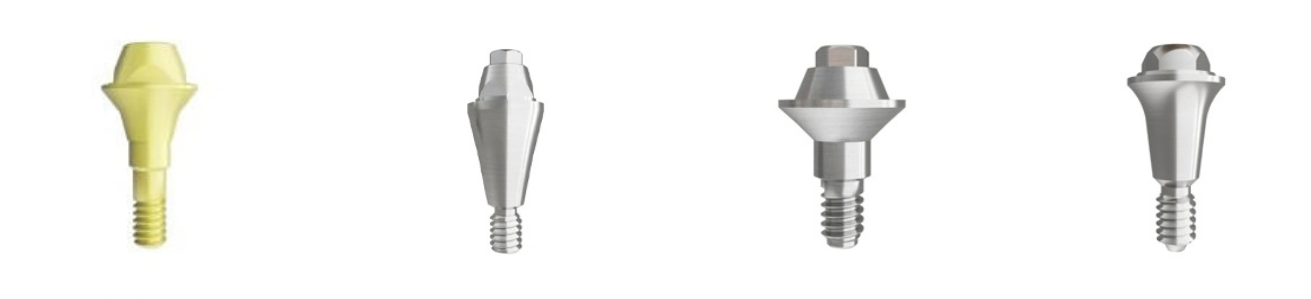
The current global implant accessory market comprises two mainstream systems: exclusive original brand accessories and compliant compatible OEM accessories. Neither type is absolutely superior or inferior. They differ only in precision boundaries, applicable scenarios, cost structures and supply capacity. Rational combination is the key to optimizing supply chains.
| Comparison Dimension | Original Brand Accessories | Compliant Compatible OEM Accessories |
| Interface Fitting Precision | Closed original parameters, zero-gap fitting with error-free adaptation | Micron-level drawings benchmarking original products, calibrated by versions with stable and qualified sealing performance |
| Clinical Validation Background | Decades of clinical data, suitable for all high-risk complex cases | Meets standards for conventional permanent restoration; usage boundaries exist for highly complex high-risk cases |
| SKU and Inventory Pressure | Exclusive to single systems with abundant SKUs and high stocking costs | One product compatible with multiple systems, drastically reducing SKUs and enabling lean inventory |
| Supply Flexibility | Restricted by brand production capacity and regional quotas; unstable lead times and frequent stockouts | Flexible mass production, sufficient stock, rapid iteration and support for small-batch customization |
| Procurement Cost & Profit | Heavy brand premium, transparent channel profits and limited profit margins | No brand premium, prominent cost performance and ample profit space for distributors |
| Market Application Scenarios | High-end specialty clinics, backup for highly complex restorative cases | General dental clinics, bulk restoration in dental laboratories and regular cross-border distribution |
Original manufacturer accessories boast irreplaceable stability backed by complete clinical accumulation. Nevertheless, they struggle to adapt to the current market trend of mixed multi-system usage, with persistent pain points including inventory backlog, delivery constraints and thin profit margins. Represented by RE-TECH, compliant compatible accessories adopt precise drawing replication, version iteration updates and batch precision quality control systems. While guaranteeing safety for routine clinical use, they effectively resolve various traditional supply chain pain points and have become the primary choice for regular stocking by global distributors.
Implant accessories are micron-level precision medical devices. Qualified samples do not guarantee stable mass production, and similar appearance does not signify compliant parameters. Quality levels vary drastically across the market. A stable supply chain must establish standardized screening logic and focus on four core requirements.
Medical-grade raw materials to guarantee biosafety:Qualified clinical accessories must adopt medical-grade Ti-6Al-4V ELI titanium alloy featuring high purity, corrosion resistance, fatigue resistance and excellent biocompatibility. No metal precipitation, oxidation discoloration or soft tissue irritation will occur during long-term intraoral service. Industrial titanium and recycled inferior raw materials must be rejected to secure clinical safety from the source.
Precise adaptation capability for version iterations: Major implant brands continuously fine-tune interface taper, groove depth and platform dimensions. Old and new versions look highly similar yet feature incompatible parameters. Reliable accessory manufacturers can accurately distinguish differences across brands, series and versions, and update production drawings and processing parameters in real time. Low-end universal accessories lack version segmentation, which easily causes fitting failure, rocking upon seating and insufficient locking for newly launched implants.
Batch consistency control in mass production:Mass production stability is the biggest threshold for supply chains. Formal factories implement full-process batch inspection, including 3-coordinate dimension verification, torque fatigue testing, sealing sampling inspection and appearance process testing. Micron-level tolerance drift is strictly controlled to ensure consistent fitting and stable quality for every batch, eliminating the common industry issue of qualified samples yet defective bulk goods.
Complete compliant traceability system:Accessories for global trade and formal clinical markets need ISO13485 medical device manufacturing certification, material test reports, biocompatibility reports and batch quality inspection records. Complete traceable documentation satisfies compliance requirements for customs clearance, market supervision and clinical quality control in different countries.
Single-category stocking cannot satisfy diversified case demands from end users. Mature brands and distributors adopt tiered layout logic to match corresponding accessories according to case risk levels, usage scenarios and customer tiers, achieving optimal balance among safety, inventory and profit.
Full-mouth immediate loading, severe bone defect restoration, anterior high-level aesthetic restoration and long-term high-occlusal-load cases carry high clinical risks and impose strict requirements on accessory stability, sealing and mechanical properties. Original accessories are prioritized. Supported by decades of clinical data, they minimize complications and serve high-end precision treatment scenarios.
Over 90% of clinical cases including regular single-tooth restoration, fixed bridge restoration, secondary gingival contouring, conventional impression taking and digital scanning can adopt fully validated compliant compatible OEM accessories. Their precision, sealing and mechanical stability fully meet permanent restoration standards. They reduce end-user procurement costs, streamline channel SKUs, optimize inventory turnover and lift profit margins.
Universal stock parts can be stocked in small quantities for model adjustment, technician training practice, short-term provisional transitional restoration and emergency clinic replenishment. They fulfill basic demands at ultra-low cost, enrich product gradients and further cut procurement expenses for basic consumables.

Most fitting problems arise from visual-only selection. Core differences of implant interfaces lie at the micron level. Products may look indistinguishable yet differ in taper, groove depth and thread parameters, creating interfacial clearance and micro-movement after assembly. Over time, bacterial leakage, screw loosening and marginal bone resorption may occur, leaving long-term hidden clinical hazards.
Low-cost universal accessories seem cheaper in procurement, yet suffer from large batch fluctuations, high rework rates and frequent customer disputes. They severely damage end-user reputation and raise after-sales costs. True cost performance belongs to compliant compatible accessories balancing stable quality, reasonable pricing and low after-sales risks.
Low-grade counterfeits lacking quality control, version iteration and batch testing do have high risks. However, regular clinical-grade OEM compatible accessories are fully benchmarked against original parameters and verified via multi-dimensional practical tests with controllable risks. They are completely suitable for conventional permanent restoration and fundamentally different from inferior counterfeit products.
Q1: Can compatible OEM accessories replace original parts for conventional permanent restoration?
A: Yes. Compliant OEM accessories with complete quality control, precise version adaptation and qualified batch testing satisfy clinical permanent restoration standards in material, precision, mechanical performance and biocompatibility. They cover more than 90% of routine cases. Original accessories are recommended as backup only for ultra-difficult high-risk cases.
Q2: How can clinics using multiple implant systems optimize accessory stocking?
A: Abandon full-SKU stocking for single brands. Adopt multi-system compatible OEM accessories as core supplies for conventional restoration, keep a small volume of original accessories for high-risk cases, and stock limited standard parts for provisional and training scenarios to realize lean inventory, minimized risks and maximized profits.
Q3: What is the most critical verification point for implant accessory procurement?
A: Prioritize verification of version adaptation capability, medical material certificates, 3-coordinate dimension reports and torque fatigue test data. Confirm manufacturers possess stable mass production and iteration capacity rather than merely checking price and appearance.
Q4: Why do the same accessories show fitting discrepancies across batches?
A: The root cause is inadequate factory QC and tolerance drift during mass production. Small manufacturers only conduct first-article inspection, leading to significant parameter deviation in bulk production. Formal suppliers implement batch sampling inspection to strictly maintain batch consistency and stable long-term supply.
Q5: What is the core market value of compatible accessories?
A: They break monopolies of original brands, streamline supply chain SKUs, cut inventory and procurement costs, resolve stockout issues of original manufacturers and stabilize end-user delivery while guaranteeing clinical restoration quality. They help distributors escape low-price competition and build differentiated quality advantages.
As the global dental implant industry develops toward digitalization, openness and diversification, the traditional closed single-brand supply model for original accessories can no longer meet market demands of mixed multi-system usage. Competition in the implant accessory market has evolved beyond simple price rivalry into comprehensive competition covering precision stability, version iteration capability, mass production quality control, supply delivery efficiency and compliance systems.
With profound clinical accumulation, original accessories remain the optimal choice for high-risk complex cases and play a core role as clinical safety backups. Compliant and precise OEM compatible accessories, boasting lean inventory, flexible delivery, high cost performance and stable quality, have become staple products for conventional clinical restoration and global channel distribution. The tiered model supplemented by a small amount of universal stock parts for basic provisional scenarios represents the most scientific and robust supply chain operation solution at this stage.
For implant brands and distribution partners, only by accurately understanding the functional boundaries of various accessories, strictly enforcing quality screening standards, establishing tiered product structures and avoiding industry misconceptions can they balance clinical safety, inventory efficiency and profit margins amid fierce market competition and achieve long-term, stable and sustainable development.