![[slide:title]](/static/upload/other/20260512/1778551853592214.webp)
![[slide:title]](/static/upload/other/20260512/1778551954982306.webp)
Time:2026-09-14 Form:本站
The dental clinical market is currently marked by a clear trend of mixed use of multiple brands and implant systems. A single dental clinic often handles restorative, follow-up and revision cases for implants from different brands. This continuously increases inventory, stocking, supply and after-sales pressure for distributors of dental components. The traditional stocking model that relies solely on original manufacturer brands can no longer meet the fragmented and diversified demands of end customers.
With universal interfaces, standardized parameters and consistent batch quality, multi-system compatible implant components have gradually become the mainstream option in the dental supply chain. For dental distributors, compatible components bring more than price advantages. They deliver all-round upgrades to inventory structure, capital turnover, customer service, after-sales risk control and long-term operational stability. Starting from the actual operation scenarios of distributors, this article analyzes the core value of multi-system compatible components layer by layer.
Original implant systems from major manufacturers all feature independent interface specifications, platform dimensions and version parameters. Each model and version corresponds to dedicated healing abutments, scan bodies, transfer copings and screws. If distributors fully stock the complete range of original components, hundreds of SKUs must be maintained. This creates heavy warehousing pressure, and inventory counting, classification, inbound and outbound management are prone to errors.
Multi-system compatible components adopt standardized R&D logic. A single product can be compatible with multiple mainstream implant platforms, drastically reducing the range of stocked items. There is no need to stock goods separately for each brand. Basic inventory can cover more than 80% of routine restorative cases in the market, making the overall inventory structure lighter and more standardized.
More complex SKUs lead to higher manual matching error rates. The streamlined and unified compatible component system features clearer model identification and well-defined adaptation scope. It effectively reduces wrong orders, rework and after-sales issues caused by model confusion and version disorder, greatly improving daily shipping efficiency.
Original components are highly brand-specific with very low universality. Once dental clinics switch implant brands or stop using a certain system, the distributor’s existing stock is likely to become dead inventory, tying up capital for a long time. Multi-system compatible components are not limited by the product lifecycle of a single brand. They fit mainstream systems circulating in the market and carry an extremely low risk of unsold stock.
Leveraging the universality of compatible components, distributors do not need to tie up large amounts of capital in bulk stock. A small-batch, high-turnover stocking model can be adopted. With the same capital scale, compatible components can cover broader customer demands, accelerate capital turnover and raise the overall operational fault tolerance rate.
Reduced inventory quantity and streamlined SKUs directly lower occupied warehouse space, inventory ledger management and manual counting and other hidden costs. For small and medium-sized distributors and cross-border traders, lightweight inventory is a key detail to boost overall profit margins.
Most dental institutions do not stick to one single implant system at present. They flexibly select implant brands according to patients’ bone conditions, restorative plans and budgets. End customers tend to place orders with multiple brands, small order quantities and frequent replenishment. Single-source original supplies cannot meet one-stop procurement requirements.
By offering multi-system compatible components, distributors can serve clinics and dental laboratories using different implant systems at the same time. Customers can purchase all routine components without contacting multiple suppliers, which greatly enhances end customers’ willingness to cooperate and repurchase rates.
Dental laboratories receive restorative cases from external clinics with a chaotic mix of systems and numerous models, creating strong demand for universal components. A stable supply of multi-system compatible components can perfectly match the business rhythm of mass production and fast delivery in laboratories. It serves as a core advantage for distributors to develop large B-end customers.
Cross-border original components generally suffer from long lead times, unstable customs clearance and frequent regional stockouts. If original manufacturers run out of stock, clinical work at end clinics will be disrupted, easily triggering customer complaints and lost orders.
Mature compatible component supply chains mainly supply ready goods with flexible production and replenishment systems. Distributors can maintain safe inventory year-round to quickly respond to urgent replenishment requests, ad-hoc additional orders and emergency restoration cases from end customers.
Interface parameters of mainstream implant systems keep being iterated. Whether the supply chain can update versions synchronously directly determines the long-term competitiveness of distributors. In terms of version iteration and parameter updates, RE‑TECH keeps pace with market changes. Independent parameter calibration and adaptation differentiation are performed for old and new version interfaces of various systems, ensuring that component models in circulation remain up-to-date. Distributors do not need to frequently change suppliers to continuously meet the latest clinical demands.
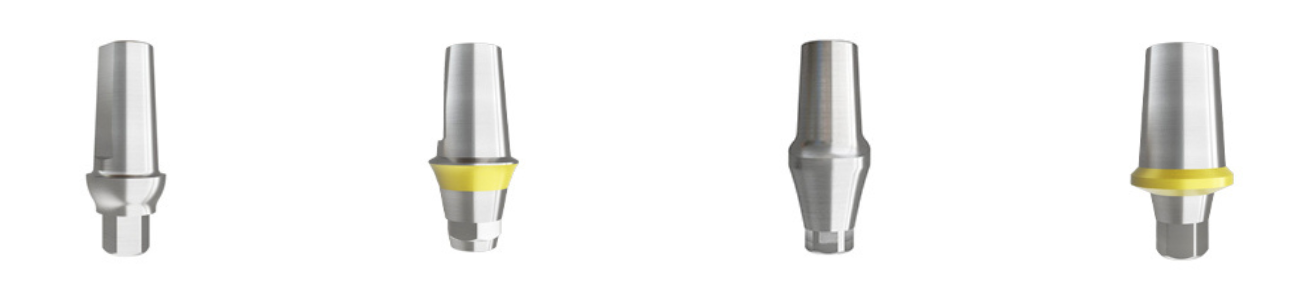
Most after-sales problems do not stem from product quality defects, but from micro-gaps, micromovement and poor marginal sealing caused by mixed use of old and new versions and mismatched parameters. Standardized multi-system compatible components have undergone multiple rounds of adaptation verification and can effectively avoid cross-version adaptation risks.
One major cause of frequent after-sales incidents is large tolerance fluctuations between batches. Some suppliers provide samples with qualified precision, yet tolerances vary widely in mass production, leading to inconsistent clinical outcomes. In mass production, RE‑TECH adheres to unified tolerance standards, material and processing specifications and quality control procedures. This ensures highly consistent fitting feel, marginal precision and torque performance of components from every batch, lowering after-sales risks from the source.
High-quality compatible components support both conventional impression-taking and digital scanning workflows. Physical part fitting matches CAD databases synchronously, preventing rework triggered by deviations in digital data and fully adapting to mainstream clinical workflows today.
| Operation Dimension | Multi-Brand Original Components | Compliant Multi-System Compatible Components |
| SKU Management Difficulty | High; complex models prone to confusion | Low; streamlined SKUs with strong universality |
| Inventory Capital Pressure | Heavy; large capital tied up across many product lines | Light; low inventory and high turnover |
| Supply Stability | Poor; long lead times and frequent stockouts | Stable; sufficient ready stock and timely updates |
| End-Customer Adaptation Scope | Limited to customers using one single brand | Covers clinics and laboratories with multiple implant brands |
| After-Sales Failure Rate | Relatively high; complex versions prone to errors | Relatively low; standardized parameters and stable batches |
Most single-tooth restorations, simple bridge restorations, secondary healing and impression cases in the market require standardized component stability and compatibility. Qualified compatible components can fully meet long-term clinical needs and are suitable as core stocked products.
Original components can still be adopted for complex cases requiring high anterior aesthetics, full-arch reconstruction, poor bone conditions and extremely high occlusal load. Build an inventory structure with compatible components as the main stock and original components as backup, balancing profit and clinical safety.
Regardless of the supplier’s qualifications, passive seating tests, torque tests and digital data matching tests must be completed for new component lines. Only after confirming stable fitting, zero gaps and no micromovement can the products be promoted to end customers in large quantities.

Q1: Will multi-system compatible components affect the long-term stability of restorations?
A: No. Restoration stability depends on interface parameter accuracy, manufacturing tolerances, material quality and batch quality control, not whether the parts are original manufacturer products. Compliant compatible components with precisely benchmarked parameters can fully satisfy long-term clinical requirements for routine cases.
Q2: Can multi-system compatible components really reduce inventory pressure?
A: Yes, significantly. One single compatible SKU can replace multiple original brand-specific models, drastically cutting the quantity and categories of stocked goods and solving the problems of bloated inventory and capital occupation caused by stocking mixed multi-brand products.
Q3: Why are more and more distributors switching to compatible component systems?
A: The end market has entered an era of mixed use of multiple implant systems. Original components feature high costs, frequent stockouts and heavy inventory burdens and cannot support lightweight operations. A reliable compatible component supply chain helps distributors improve profit margins, reduce after-sales issues and expand customer groups. It represents the most cost-effective operation model at present.
Q4: How to judge whether a compatible component supply chain is professional and reliable?
A: Focus on four key points: precision of parameter replication, capability to distinguish old and new versions, batch consistency and completeness of supporting digital databases. Professional suppliers maintain clear compatibility lists, stable quality control and continuous version update capabilities.
Q5: Compatible components fit multiple systems. Will there be issues of imprecise universal fitting?
A: Qualified compatible components are not vaguely universal. They are engineered to target independent parameters of each mainstream platform, with strict differentiation of taper, threads, anti-rotation structures and platform dimensions. If selected according to the compatibility list, precise fitting can be achieved without fitting clearance.
Mixed use of multiple implant systems represents a long-term trend in dental clinical practice. The traditional cumbersome, high-cost stocking model of full-range original components no longer matches market rhythms. With standardized parameters, streamlined SKUs, stable supply and consistent batch quality, multi-system compatible implant components help distributors optimize inventory structures, revitalize working capital, expand customer channels and reduce after-sales risks. Combined with mature supply chain technical iteration and quality control capabilities, paired with scientific stocking strategies, dental distribution businesses can achieve lighter, more stable and more competitive long-term development while guaranteeing clinical safety.